
Japan’s Trademark Consent System
Practical options for overcoming similar-mark refusals in Japan
In Japan, an application for a mark identical or similar to a prior registered trademark for identical or similar goods or services is generally refused under Article 4(1)(xi) of the Trademark Act.
Since April 1, 2024, Japan has introduced a statutory consent system. Registration may be possible if the prior trademark owner consents and there is no likelihood of confusion between the two marks.
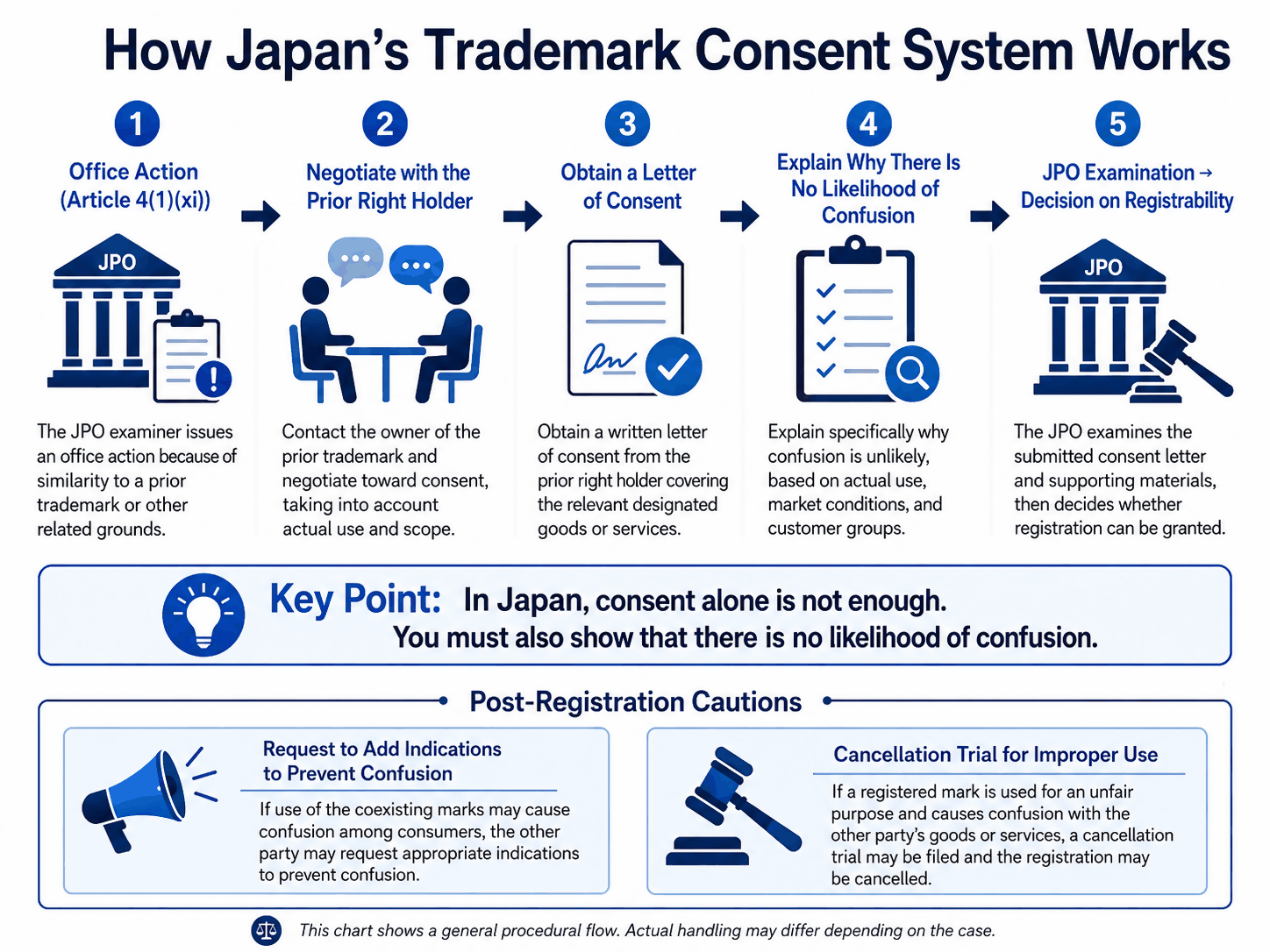
In Japan, a consent letter alone is not enough. Supporting materials showing no likelihood of confusion are also required.
1. Requirements in Japan
The core requirements are: (1) consent from the prior registered trademark owner, and (2) proof that confusion is unlikely. The JPO will review the specific circumstances of the two marks.
2. Practical points to prepare
- Relationship between the applicant and the prior right holder
- Appearance, pronunciation, and meaning of the two marks
- Goods/services, trade channels, and customer groups
- Actual use and market coexistence
- Brand management rules and measures to prevent confusion
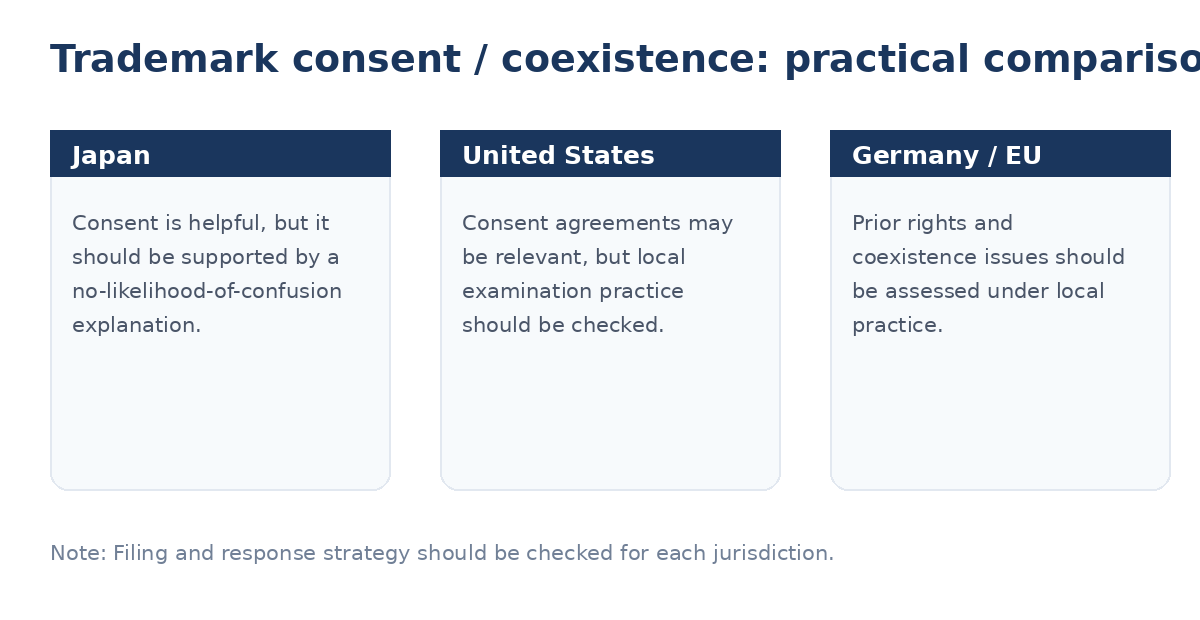
3. Points for U.S. and European brand owners
Companies familiar with U.S. or European trademark practice should note that Japan has its own examination practice. A letter of consent is helpful, but it should usually be supported by a concrete explanation that confusion is unlikely.
In Japan, strategy should be considered together with the cited mark, the goods and services, actual business fields, channels of trade, and the possibility of narrowing the specification.
4. How MEVRO can assist
MEVRO supports Japanese trademark office action responses, assessment of the consent system, negotiation strategy, drafting of consent letters and supporting explanations, and amendments to goods or services.
← Back to Home